WHERE DOES YOUR DOG HIDE DURING STORMS?
PR Newswire
RALEIGH, N.C., May 27, 2026
Hiding is One of 16 Signs a Dog Suffers From Thunderstorm Aversion;
Florida Veterinary Study Hopes to Help
RALEIGH, N.C., May 27, 2026 /PRNewswire/ -- Thunderstorm aversion is more than normal stress; it's a serious and often undertreated condition affecting millions of dogs. In a published study, nearly 50% of dog owners reported their pets exhibited fear when exposed to loud noises such as thunder. But hope could be on the horizon.
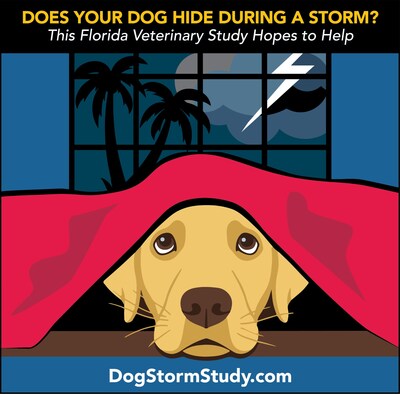
A veterinary clinical study taking place at multiple locations in Florida this summer is evaluating an investigational oral medication given twice daily during storm season that could offer round-the-clock relief. Participation is free, and qualifying dogs receive all study-related care, including evaluations, diagnostic testing, exams, and medication (or placebo) at no cost.
Florida Dogs Experience More Storms
With frequent, powerful summer storms, Florida--often called the nation's storm capital--creates near-daily distress for dogs affected by thunderstorm aversion. These dogs often display their intense fear by hiding, cowering, trembling, destructiveness, self-harm, and more.
After moving from North Carolina in 2024, Marissa Snellinger was surprised by the number of storms in Southwest Florida and their impact on her 10-year-old Labrador Retriever.
"I seriously believe that one day she will have a seizure or a stroke during a storm because she gets herself so wound up and upset," said Snellinger. "Here, the storms are a daily occurrence; my heart just aches for her."
Dogs and Owners Suffering
Thunderstorm aversion goes beyond fear. For many dogs, their extreme reaction begins long before a storm arrives, triggered by changes in barometric pressure, sound, or light, and can even last hours after the storm passes. This condition can have life-altering effects on both dogs and their owners.
Jan Starbuck says her dog's condition is "controlling her life." Her black lab senses storms well before they arrive, fueling a panic in her dog that can last up to a day later.
"[My dog] tries to make herself invisible. I can see the terror in her face. She shakes, tucks her tail, and runs. We've found her in a closet, under the bed, even once inside my [clothes] dryer. I hate seeing her suffer, so I do whatever I can to be there for her, which has included sleepless nights and canceling plans, but honestly, not much helps."
What Dogs are Eligible?
In order to be eligible, dogs must show signs of thunderstorm aversion, weigh at least 8.8 lbs., be in good general health, and meet certain other criteria. Interested dog owners can visit DogStormStudy.com to learn more and see if there's a participating veterinary study site nearby. Owners who believe their dogs may qualify should complete a short online pre-screening questionnaire, which helps determine whether their dogs may be eligible for an in-person evaluation by a trained Study Veterinarian.
Time is Limited – Act Now
Interested pet owners should act quickly, as the study only runs through Florida's summer thunderstorm season.
Study participation offers pet owners a chance to help their dogs and support research that could potentially benefit generations of dogs in the future.
To learn more, visit DogStormStudy.com
About Visionaire
Visionaire Research & Education supports patient recruitment for veterinary clinical studies, helping veterinary pharmaceutical Sponsors speed new pet medications to market. The Company's number one priority is helping dogs, cats, and horses — and their owners — experience a better quality of life through innovative treatments and solutions. For more information, visit vrande.com.
Contact: Megan Hepp, 919-293-0243 x 202; megan@vrande.com
 View original content to download multimedia:https://www.prnewswire.com/news-releases/where-does-your-dog-hide-during-storms-302780441.html
SOURCE Dog Storm Study


