How Regenerative Therapy May Support Brain Cell Communication in Parkinson's Disease
Saint Petersburg, United States - June 26, 2026 / Stemedix /
Saint Petersburg, Florida, June 26, 2026 – Stemedix has released new educational information discussing how regenerative therapy is being explored in research focused on brain cell communication in Parkinson’s disease. The announcement comes as interest continues to grow around regenerative medicine treatment and its potential role in supporting neurological function at the cellular level.
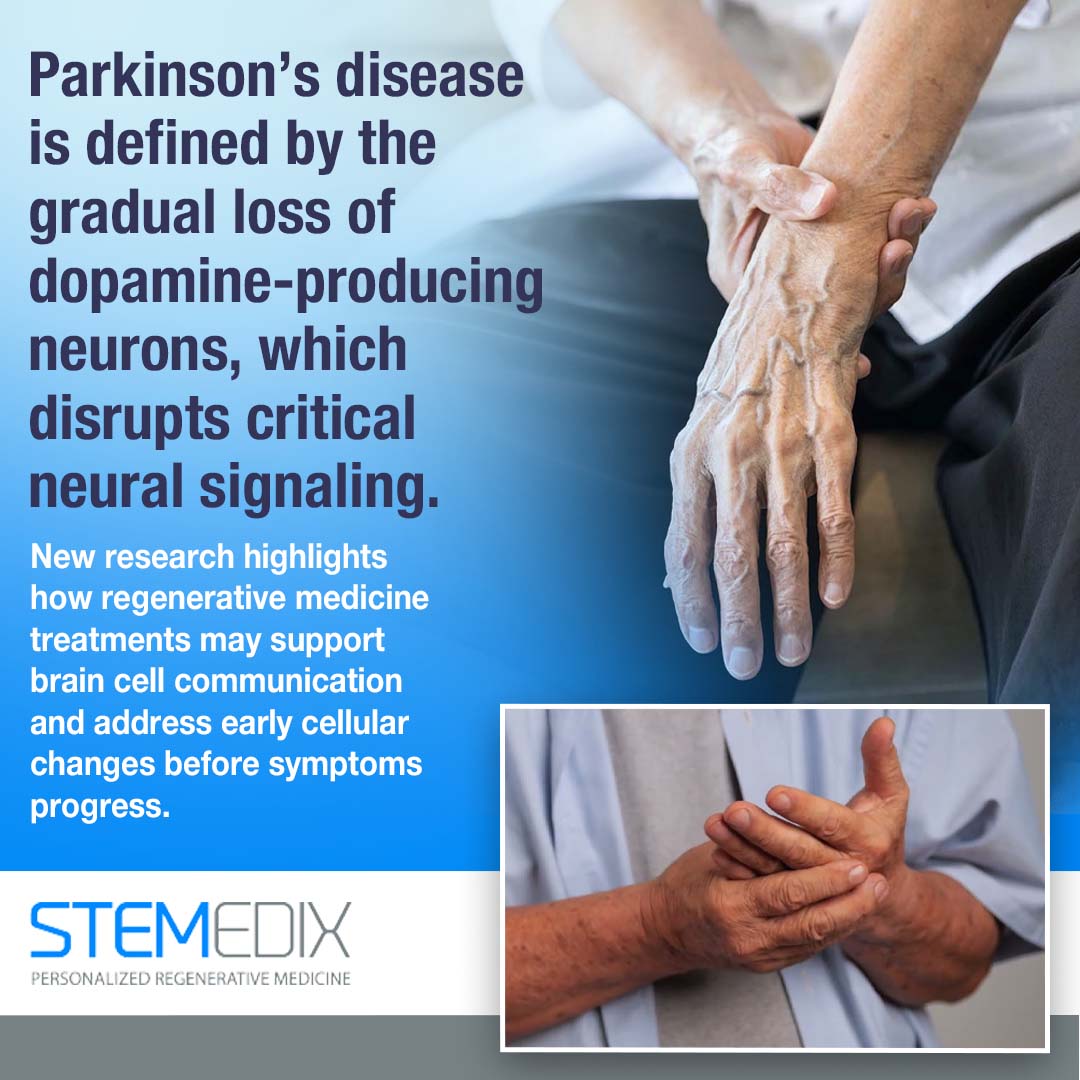
Parkinson’s disease affects nearly one million people in the United States and is characterized by the gradual loss of dopamine-producing neurons in the brain. This loss affects how brain cells communicate, influencing movement, coordination, mood, and cognitive function over time.
The educational overview references current research trends in regenerative therapy, including studies focused on cellular signaling, inflammation, and neurotransmitter balance.
How Parkinson’s Disease Affects Brain Cell Communication
Dopamine Loss and Neural Signaling Breakdown
In a healthy brain, neurons communicate through chemical messengers called neurotransmitters. Dopamine plays a key role in regulating movement and coordination.
In Parkinson’s disease, dopamine-producing neurons in the substantia nigra gradually deteriorate. This leads to reduced signaling between brain regions responsible for movement control. As communication weakens, symptoms such as tremors, stiffness, and slowed movement become more noticeable.
Research suggests that by the time Parkinson’s symptoms appear, a large percentage of dopamine-producing neurons may already be affected. This highlights the importance of studying early cellular changes that occur before and during symptom progression.
Beyond Dopamine: The Role of Serotonin
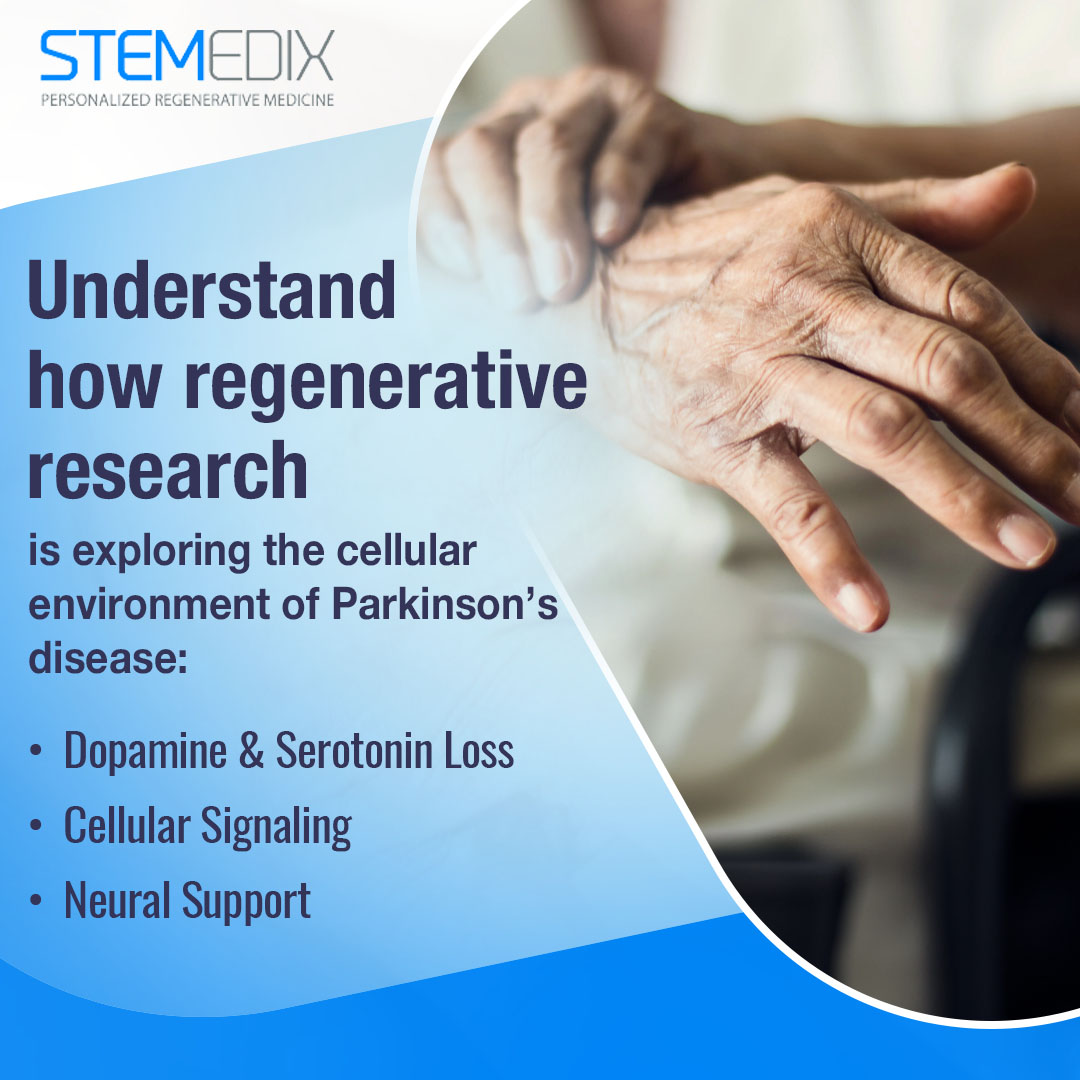
While dopamine is central to movement, serotonin is also affected in Parkinson’s disease. Serotonin influences mood, sleep, and cognitive stability. Loss of serotonin-producing neurons may help explain why many patients experience fatigue, depression, and sleep disturbances alongside motor symptoms.
Scientists continue to examine how multiple neurotransmitter systems interact in Parkinson’s disease rather than focusing on a single pathway.
Growing Research Interest in Regenerative Approaches
Cellular Repair and Communication Pathways
Current research into regenerative medicine treatment includes studies involving mesenchymal stromal cells (MSCs), which are being evaluated for their ability to interact with damaged tissue and support cellular environments affected by disease.
These cells are being studied for their potential to release signaling molecules that may influence inflammation and cell communication. Researchers are also examining MSC-derived exosomes, which are small vesicles involved in transferring biological signals between cells.
Although findings remain in early stages, interest continues to grow around how these mechanisms might relate to neurological conditions such as Parkinson’s disease.
Focus on Inflammation and Neural Support
Chronic inflammation in the brain is believed to contribute to neuron damage and disrupted communication pathways. Studies suggest that regenerative biological products may interact with inflammatory responses and help support existing cellular structures.
Fred Palmer, CEO of Stemedix, noted that research developments in this field continue to shape scientific understanding of neurological disease progression. “Scientific interest in regenerative therapy is expanding the way researchers look at brain cell communication and inflammation in Parkinson’s disease,” Palmer said. “These studies are still ongoing, but they help provide a clearer picture of how cellular environments may influence neurological decline.”
Patient Evaluation Process for Regenerative Therapy in Saint Petersburg, FL
Individuals exploring regenerative therapy in Saint Petersburg, FL, through Stemedix must first undergo a medical review process. The evaluation requires confirmed diagnosis documentation, along with relevant medical records, imaging, and lab results.
Board-certified physicians review each case individually to determine whether a patient may be a candidate for further evaluation. Treatment recommendations are based on medical history and current health status. Each case is handled separately, and outcomes vary depending on the individual’s condition.
Support Services for Traveling Patients
Patients traveling to Saint Petersburg for evaluation may receive assistance with logistics such as ground transportation coordination, lodging guidance, and mobility support. Care coordination is provided throughout the evaluation process to help manage appointments and documentation requirements.
The Bayfront Medical Plaza location serves as the primary site for consultations and medical reviews for individuals seeking regenerative medicine treatment options.
About Stemedix
Stemedix is a regenerative medicine clinic based in Saint Petersburg, Florida. The clinic focuses on providing access to regenerative medicine treatment through physician-reviewed patient evaluations and individualized care coordination. Stemedix works with patients managing a range of chronic and degenerative conditions and supports those exploring regenerative therapy in Saint Petersburg, FL, through medical record review and treatment planning assistance.
Media Contact
Fred Palmer
CEO, Stemedix
Bayfront Medical Plaza 601
7th Street S. Suite 565
Florida, Saint Petersburg 33701
Phone: (727) 456-8968
Email: yourjourney@stemedix.com
Website: https://stemedix.com/


Contact Information:
Stemedix
Bayfront Medical Plaza 601 7th Street S. Suite 565
Saint Petersburg, FL 33701
United States
Fred Palmer
https://stemedix.com/
Original Source: https://stemedix.com/how-regenerative-therapy-may-support-brain-cell-communication-in-parkinsons-disease/

