New York, NY, Jan. 22, 2026 (GLOBE NEWSWIRE) -- Disclaimer: This article is for informational purposes only and does not constitute medical advice. Always consult a qualified healthcare professional before starting any supplement, especially if you have health conditions, take medications, or are pregnant or nursing. Dietary supplements are not FDA-evaluated and are not intended to diagnose, treat, cure, or prevent disease. Individual results vary. This article contains affiliate links. If you purchase through these links, a commission may be earned at no additional cost to you.
Searches for phrases like "best brain health supplement" and "strongest supplement for brain health" continue to rise heading into 2026 as consumers attempt to understand how cognitive support products differ in formulation strength, dosing transparency, and ingredient-level research. This report is for informational purposes only and does not recommend or endorse any supplement. Instead, it examines how consumers evaluate brain health supplements based on publicly available research and label disclosures. MemoryFuel is referenced as one formulation example within this category, but ingredient research does not establish outcomes for any specific finished product.
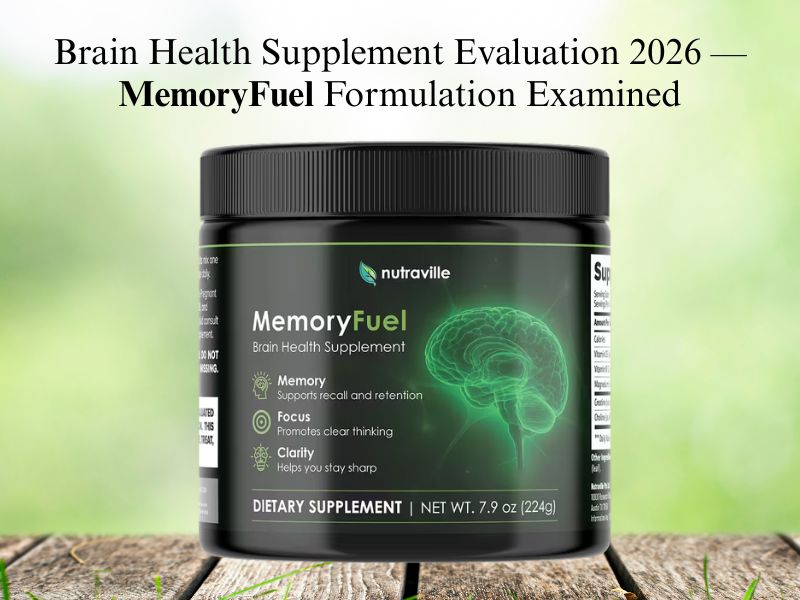
The timing reflects broader demographic and wellness trends. Public information from the National Institute on Aging (NIH) continues to emphasize cognitive health as a common concern in older adulthood, contributing to increased consumer interest in how brain health supplement formulations differ. This analysis examines the criteria consumers typically apply when researching this category and the scientific context behind commonly featured ingredients.
View the current MemoryFuel offer (official MemoryFuel page)
What Do Consumers Mean When They Search for the "Best Brain Health Supplement"?
When consumers search for the "best brain health supplement," they are typically attempting to evaluate products across multiple dimensions rather than seeking a single definitive answer. Understanding these evaluation criteria helps explain why this search term has become one of the most competitive in the cognitive health category.
Formulation Strength and Dosing Clarity
Consumers researching the best brain health supplement options often prioritize products that disclose exact dosing rather than proprietary blends. Full label transparency allows comparison against amounts used in published research, enabling more informed decision-making.
Ingredient Forms and Research Context
The specific form of each ingredient matters to informed consumers. For example, creatine monohydrate has been studied more extensively than other creatine variants for cognitive applications. A 2024 systematic review and meta-analysis published in Frontiers in Nutrition examining 16 randomized controlled trials found that creatine monohydrate supplementation has been studied for its effects on memory and attention in adult populations—making ingredient form a relevant consideration for those evaluating the best brain health supplement category.
Population Relevance of Supporting Research
Consumers increasingly examine whether ingredient research was conducted in populations similar to their own. Studies on individual ingredients do not establish that any specific supplement product will produce the same outcomes. The translation from controlled research conditions to real-world supplementation involves numerous variables that cannot be predicted.
Tolerance and Lifestyle Fit
Practical considerations—including formulation type (capsule, powder, liquid), taste, ease of use, and digestive tolerance—factor into how consumers define what qualifies as the best brain health supplement for their individual circumstances.
Label Transparency and Third-Party Verification
Consumers evaluating the best brain health supplement options often look for complete ingredient disclosure, manufacturing standards, and return policies as indicators of company confidence in their formulation.
How Consumers Interpret "Strongest Supplement for Brain Health" Without a Universal Definition
The phrase "strongest supplement for brain health" appears frequently in consumer searches, yet no standardized definition exists for what "strongest" means in this context. Understanding how consumers interpret this term provides insight into category evaluation patterns.
Higher Dosing Per Serving
Many consumers interpret "strongest supplement for brain health" as referring to products with higher amounts of active ingredients per serving. For example, a formulation containing 5,000 mg of creatine monohydrate per serving would be perceived as "stronger" in that specific ingredient than one containing 1,000 mg—though dosing alone does not determine individual response.
Formula Density and Ingredient Breadth
Some consumers interpret the "strongest supplement for brain health" as referring to formulations that address multiple pathways of cognitive support rather than single-ingredient products. This interpretation equates "strength" with comprehensiveness of approach.
Perceived Research Support
Consumers may also associate "strongest" with ingredients that have more extensive research backgrounds. A 2024 meta-analysis examining creatine and cognitive function noted that creatine monohydrate is the form used in research examining memory and processing speed—information that shapes how consumers evaluate formulation choices.
Important Context: Strength Does Not Equal Guaranteed Outcomes
Regardless of how consumers interpret "strongest supplement for brain health," individual response to supplementation varies based on baseline nutrient status, genetic factors, lifestyle variables, and numerous other characteristics. Higher dosing or more comprehensive formulations do not guarantee proportionally greater effects for any individual user.
The Scientific Context: Key Nutrients Examined in Brain Health Research
Understanding the research context behind commonly featured brain health ingredients helps consumers evaluate category claims more critically. The following summarizes ingredient-level research—not product performance claims.
Creatine Monohydrate and Cognitive Research
Creatine is involved in cellular energy metabolism, including in brain tissue. According to research published in the Journal of Clinical Investigation, creatine plays a role in adenosine triphosphate (ATP) regeneration—the primary cellular energy currency.
A 2024 meta-analysis published in Frontiers in Nutrition reviewed 16 randomized controlled trials involving 492 participants examining creatine monohydrate supplementation and cognitive outcomes such as memory, attention, and information processing speed in adults. The analysis noted that creatine supplementation was examined across different population subgroups, with researchers noting that larger clinical trials are warranted to further validate these findings.
A University of Kansas Medical Center team reported feasibility findings from a creatine monohydrate supplementation pilot and discussed measured changes in brain creatine using magnetic resonance spectroscopy.
Studies on individual ingredients do not establish that any specific supplement product will produce the same outcomes.
Choline and Neurotransmitter Precursor Research
Choline is the precursor to acetylcholine, a neurotransmitter involved in cognitive processes. According to research published in the American Journal of Clinical Nutrition, choline is associated with cholinergic transmission and has been examined in relation to memory function.
The Framingham Offspring Cohort study examining 1,391 subjects found associations between choline intake and performance on verbal memory and visual memory assessments. A 22-year prospective cohort study from China published in 2024 examined dietary choline intake in relation to cognitive function in middle-aged and elderly participants.
Magnesium and Neurological Function Research
Magnesium is involved in over 300 enzymatic reactions, including those related to neurological function. A 2024 systematic review published in Advances in Nutrition examined the relationship between magnesium status and cognitive outcomes.
According to research published in Frontiers in Endocrinology, magnesium glycinate is often discussed in research literature for its bioavailability characteristics and tolerability considerations. Direct studies specifically evaluating magnesium glycinate and cognitive outcomes are limited, but magnesium's broader role in neurological function, sleep quality, and stress response is frequently referenced in wellness research.
Vitamin D3 and Neuroprotection Research
Vitamin D is a neurosteroid hormone that has been examined for neuroprotective properties. According to research published in the Proceedings of the National Academy of Sciences, vitamin D status has been studied in relation to cognitive function in aging populations.
A 2025 cross-sectional analysis from the National Health and Nutrition Examination Survey examined associations between dietary vitamin D intake and cognitive assessment performance in elderly participants.
Vitamin B12 and Neural Integrity Research
Vitamin B12 is involved in myelin formation and neuronal physiology. According to research from Frontiers in Nutrition, vitamin B12 deficiency has been associated with cognitive changes in observational studies of older adults.
MemoryFuel as a Formulation Example: Label Details and Dosing Context
MemoryFuel, manufactured by Nutraville, represents one formulation approach within the brain health supplement category. The following information is provided as a reference point for understanding how supplement labels present ingredient information—not as an endorsement or recommendation.
Supplement Facts (Per 1 Scoop Serving):
According to the company, the MemoryFuel label discloses:
- Creatine (as creatine monohydrate): 5,000 mg
- Choline (as choline bitartrate): 300 mg
- Magnesium (as magnesium glycinate): 300 mg (71% Daily Value)
- Vitamin D3 (as cholecalciferol): 50 mcg (250% Daily Value)
- Vitamin B12 (as cyanocobalamin): 25 mcg (1042% Daily Value)
Dosing Context
The 5,000 mg creatine monohydrate amount aligns with dosing ranges commonly appearing in cognitive research literature. However, research dosing context does not predict individual response to any specific supplement product.
The formulation uses magnesium glycinate, which according to published research is often selected for its bioavailability characteristics. The vitamin D3 and B12 amounts exceed daily values, reflecting the formulator's approach to these nutrients.
Suggested Use
According to the product label, adults mix one (1) scoop with 6-8 oz. of water or favorite beverage daily.
Readers who wish to review complete label details can View the current MemoryFuel offer (official MemoryFuel page) for the most up-to-date information.
Consumer Evaluation Framework: Self-Assessment Questions
Rather than making recommendations, the following framework helps readers evaluate whether any brain health supplement—including MemoryFuel or alternatives—aligns with their individual circumstances.
Questions to Consider Before Supplementation:
- Have I discussed cognitive health concerns with a healthcare provider?
- Do I understand that ingredient research does not guarantee product performance?
- Have I reviewed my current medications for potential interactions?
- Am I comfortable with the distinction between research context and individual outcomes?
- Do I have realistic expectations about what supplementation may or may not accomplish?
Supplementation May Align With Individuals Who:
- Are seeking nutritional support and have consulted appropriate healthcare guidance
- Have dietary patterns that may result in gaps for specific nutrients
- Prefer powder formulations over capsule-based supplements
- Want transparent label disclosure for comparison against research literature
Other Approaches May Be Preferable For Individuals Who:
- Are currently taking medications that may interact with supplement ingredients
- Have existing kidney, liver, or other health conditions requiring medical guidance
- Are pregnant or nursing
- Prefer food-based approaches to nutrient intake
Availability, Pricing, and Policies (Company-Provided Information)
According to the company, MemoryFuel is offered in multi-unit packages, and pricing may vary by order size. The company also states that purchases are subject to a 90-day refund policy under its published terms. Pricing, availability, and refund conditions are subject to change and should be confirmed on the official website prior to purchase.
Contact Information
According to the company's website, Nutraville offers customer support through:
Email: support@thememoryfuel.com
Phone (US): +1 800-390-6035
Phone (International): +1 208-345-4245
Readers who wish to confirm current pricing and policies can View the current MemoryFuel offer (official MemoryFuel page) for the most up-to-date information.
Final Considerations: Evaluating Brain Health Supplement Claims
As consumer searches for the "best brain health supplement" and "strongest supplement for brain health" continue to increase, understanding how to evaluate category claims becomes increasingly important.
Key Principles for Evaluation:
Research Context Matters: Studies conducted in specific populations under controlled conditions may not translate directly to different populations or real-world use patterns. Ingredient research does not establish outcomes for finished products.
"Strongest" Lacks Universal Definition: Without standardized criteria, consumers should clarify what "strength" means for their individual evaluation—whether dosing, formula breadth, or research support.
Individual Baseline Affects Response: Individuals with genuine nutrient deficiencies may experience different responses to supplementation than those with adequate baseline levels.
Professional Guidance Remains Essential: The decision to supplement should be made in consultation with healthcare providers who can evaluate individual circumstances, potential interactions, and appropriateness for specific health situations.
This analysis has examined how consumers evaluate brain health supplements without recommending or endorsing any specific product. MemoryFuel was referenced as one formulation example to illustrate label transparency and dosing context—not as a determination of superiority within the category.
For those who have conducted appropriate due diligence and wish to explore formulation details, complete product information is available. View the current MemoryFuel offer (official MemoryFuel page).
Disclaimers
FDA Health Disclaimer: These statements have not been evaluated by the Food and Drug Administration. This product is not intended to diagnose, treat, cure, or prevent any disease. Always consult your physician before starting any new supplement, especially if you have existing health conditions, take medications, or are pregnant or nursing.
Professional Medical Disclaimer: This article is educational and does not constitute medical advice. MemoryFuel is a dietary supplement, not a medication. If you are currently taking medications, have existing health conditions, are pregnant or nursing, or are considering any major changes to your health regimen, consult your physician before starting MemoryFuel or any new supplement. Do not change, adjust, or discontinue any medications or prescribed treatments without your physician's guidance and approval.
Results May Vary: Individual results will vary based on factors including age, baseline health condition, lifestyle factors, consistency of use, genetic factors, current medications, and other individual variables. Results are not guaranteed. The ingredient research cited in this article does not establish that MemoryFuel as a finished product will produce equivalent outcomes.
Research Disclaimer: Scientific studies cited in this article examined individual ingredients under controlled research conditions. These findings do not constitute evidence of efficacy for MemoryFuel as a finished product, which has not been clinically studied. Ingredient research does not equal product performance. Studies on individual ingredients do not establish that any specific supplement product will produce the same outcomes.
FTC Affiliate Disclosure: This article contains affiliate links. If you purchase through these links, a commission may be earned at no additional cost to you. This compensation does not influence the accuracy, neutrality, or integrity of the information presented. All scientific citations and research summaries are based on published studies and publicly available information.
Pricing Disclaimer: All prices, discounts, and promotional offers mentioned were accurate at the time of publication (January 2026) but are subject to change without notice. Always verify current pricing and terms on the official MemoryFuel website before making your purchase.
Publisher Responsibility Disclaimer: The publisher of this article has made every effort to ensure accuracy at the time of publication. We do not accept responsibility for errors, omissions, or outcomes resulting from the use of the information provided. Readers are encouraged to verify all details directly with Nutraville and their healthcare provider before making decisions.
No Endorsement Statement: This article does not recommend, endorse, or promote any specific supplement product. MemoryFuel is referenced as a formulation example within the brain health supplement category for educational purposes only. Inclusion in this analysis does not constitute a determination of superiority, efficacy, or appropriateness for any individual.
Contact: Nutraville Email: support@thememoryfuel.com Phone: +1 800-390-6035

Email: support@thememoryfuel.com Phone (US): +1 800-390-6035 Phone (International): +1 208-345-4245