Ottawa, Jan. 23, 2026 (GLOBE NEWSWIRE) -- The global soy protein concentrate market size stood at USD 4.42 billion in 2025 and is predicted to grow from USD 4.64 billion in 2026 to reach around USD 7.13 billion by 2035, as reported by Towards FnB, a sister firm of Precedence Research. This growth is supported by higher adoption rates across industries like food, beverages, and nutraceuticals, which continue to innovate with soy protein concentrate.
The market is expected to grow significantly due to high demand for clean-label protein options that are sustainable and healthier. Higher demand for cost-effective and plant-based protein options also helps to fuel the growth of the market.
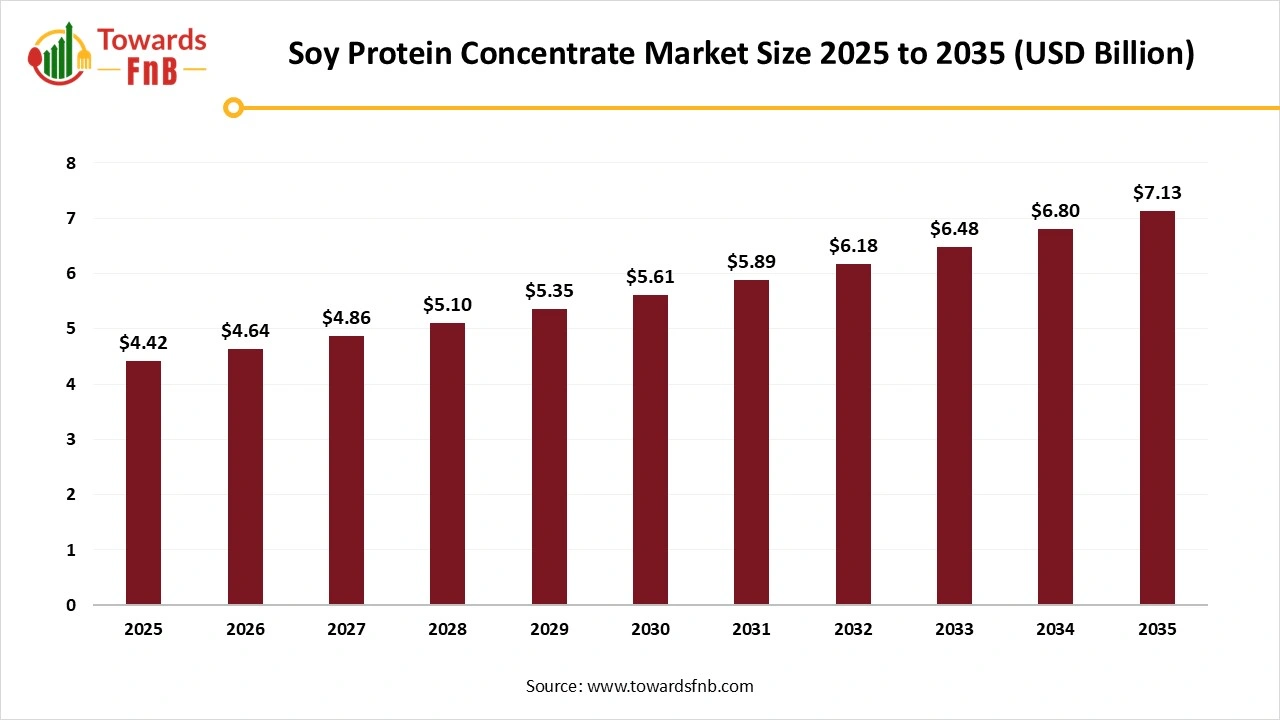
Note: This report is readily available for immediate delivery. We can review it with you in a meeting to ensure data reliability and quality for decision-making.
Access the Full Study Instantly | Download Sample Pages of the Report Now@ https://www.towardsfnb.com/download-sample/5984
Key Highlights of Soy Protein Concentrate Market
- By region, the Asia Pacific led the soy protein concentrate market with largest share of 32% in 2025, whereas North America is expected to experience growth in the foreseeable future.
- By form, the dry segment dominated the soy protein concentrate market in 2025, whereas the liquid segment is expected to grow in the foreseeable period.
- By application, the food products segment led the soy protein concentrate market in 2025, whereas the dietary supplements segment is expected to grow in the foreseeable period.
- By function, the emulsification segment dominated the soy protein concentrate market in 2025, whereas the thickening agent segment is expected to grow in the foreseeable period.
Higher Demand for Plant-Based Protein Fueling the Growth of Soy Protein Concentrate Industry
The soy protein concentrate market is expected to grow due to higher demand for plant-based protein options and the use of soy protein concentrate in different industries. The growing population of vegans, vegetarians, flexitarians, and plant-based diet followers globally, along with the crowd of health-conscious consumers, is leading to higher demand for plant-based protein options. Such options have multiple health benefits and are also ideal for managing an array of lifestyle-related health issues.
The versatility of soy protein concentrate is another major factor for the growth of the industry. Hence, it has applications in various domains such as animal feed, the food and beverage industry, nutraceuticals, and plant-based meat manufacturing industries as well. Sustainability, cost-effectiveness, water binding, emulsification, and texturing properties of the protein concentrate are other major factors for the growth of the market.
Technological Advancements Fueling the Growth of the Soy Protein Concentrate Market
Technological advancements help manufacturers enhance the product quality and efficiency for better protein and nutrient absorption, fueling the growth of the market. Technological advancements in the form of ultrasound, cold plasma, high-pressure processing, and fermentation methods help to enhance solubility and emulsification, along with eliminating allergic properties, further fueling the growth of the market. Advancements such as AI and ML also help to fuel the growth of the market. The technologies help the manufacturers to study the changes in the product after any adjustment or changes in ingredients, along with their impact on the market, further propelling the market’s growth.
Impact of AI on the Soy Protein Concentrate Market
Artificial intelligence is increasingly being applied in the soy protein concentrate market to improve extraction efficiency, functional consistency, and application performance across food, beverage, and nutrition uses. Machine learning models analyze variability in soybean origin, protein content, fiber levels, and anti-nutritional factors to optimize aqueous alcohol extraction and enzymatic treatment steps, helping manufacturers achieve targeted protein concentrations while minimizing yield loss. In product development, AI supports functionality prediction by modeling how different soy protein concentrate grades perform in meat analogs, bakery systems, beverages, and nutritional formulations, particularly with respect to water-holding capacity, emulsification, and heat stability.
AI-driven process control tools are deployed during concentration, drying, and agglomeration stages to monitor parameters such as temperature, moisture, and particle size distribution, reducing batch-to-batch variability and improving flowability and dispersibility. From a sensory and quality standpoint, AI assists in correlating processing conditions with off-flavor formation, enabling early mitigation of beany notes and bitterness before commercial scale-up. In regulatory and safety workflows, AI supports specification management, allergen risk assessment, and labeling validation in alignment with guidance referenced by the Food and Agriculture Organization and regulatory oversight applied by bodies such as the European Food Safety Authority.
Recent Developments in the Soy Protein Concentrate Market
- In May 2025, Bunge announced the launch of its new line of soy protein concentrates at IFFA. The new line provides a clean taste, neutral color, and cost-effective solution for food manufacturers.
- In February 2025, Juicy Marbles, a Slovenian plant-based meat maker, launched its new marbles lamb product with 70% of the daily recommended protein intake and 40% of fiber on its North American launch. The new products contain 26% soy protein concentrate.
View Full Market Intelligence@ https://www.towardsfnb.com/insights/soy-protein-concentrate-market
New Trends of Soy Protein Concentrate Market
- Higher demand for plant-based protein options by the growing population of health-conscious vegans, vegetarians, and flexitarians is one of the major factors for the growth of the market.
- High preference for clean-label, organic, non-GMO, and sustainable options is another major factor for the growth of the market.
- Use of functional ingredients for enhancing emulsification, improving texture, maintaining water retention, and other similar factors also helps to fuel the growth of the market.
- Higher demand for protein-rich and functional snacks, beverages, and convenient options also helps to fuel the growth of the market.
- Innovative products such as soy protein hydrolysates and improved processing techniques also help to propel the growth of the market.
Product Survey of the Soy Protein Concentrate Market
| Product Category | Description or Function | Common Forms or Variants | Key Applications or User Segments | Representative Brands or Product Types |
| Soy Protein Concentrate (Standard) | Moderately refined soy protein with reduced soluble carbohydrates, offering balanced functionality and nutrition | Powdered concentrates, granulated forms | Processed foods, bakery, snacks | Standard soy protein concentrate ingredients |
| Textured Soy Protein Concentrate | Structured soy protein designed to provide fibrous, meat-like texture | Chunks, granules, flakes | Plant-based meat manufacturers, processed meats | Textured soy protein concentrates |
| Low-Fat Soy Protein Concentrate | Soy protein concentrate with reduced residual oil content | Defatted powder forms | Nutrition-focused foods, protein-fortified products | Low-fat soy protein concentrates |
| High-Functionality Soy Protein Concentrate | Optimized for water binding, emulsification, and gelation | Functionalized concentrate powders | Meat processing, sauces, ready meals | Functional soy protein concentrate systems |
| Organic Soy Protein Concentrate | Produced from certified organic soybeans | Organic-certified powders and granules | Organic and clean-label food brands | Organic soy protein concentrates |
| Non-GMO Soy Protein Concentrate | Derived from identity-preserved non-GMO soybeans | Non-GMO verified powders | Non-GMO food manufacturers | Non-GMO soy protein concentrates |
| Soy Protein Concentrate for Meat Alternatives | Tailored for texture, juiciness, and bite in plant-based meat | Extrusion-ready granules | Plant-based meat producers | Meat-alternative soy protein systems |
| Soy Protein Concentrate for Bakery | Enhances dough strength, moisture retention, and protein content | Fine powder blends | Industrial bakeries, snack producers | Bakery-grade soy protein concentrates |
| Soy Protein Concentrate for Dairy Alternatives | Designed for protein content and mouthfeel in non-dairy formulations | Beverage-grade and gel-forming variants | Plant-based dairy manufacturers | Soy protein concentrate dairy-alternative systems |
| Specialty Soy Protein Concentrate | Application-specific concentrates with customized functionality | High-water-binding or high-emulsification variants | Infant nutrition, medical nutrition | Specialty soy protein concentrate formulations |
For Detailed Pricing and Tailored Market Report Options, Click Here: https://www.towardsfnb.com/checkout/5984
Soy Protein Concentrate Market Dynamics
What Are the Growth Drivers of the Soy Protein Concentrate Market?
Higher demand for plant-based protein-rich options is one of the major factors for the growth of the market. The growing population of vegans, vegetarians, flexitarians, and plant-based diet followers also helps to fuel the growth of the market. The growing health and wellness trends leading to higher demand for healthier, sustainable, and protein-rich options are another major factor for the growth of the market. Cost-effectiveness is another major factor for the growth of the market, as soy protein concentrate is an economical option compared to premium plant protein or meat-based protein sources. The market also observes growth, as it is an option for dairy and meat alternatives, fueling the growth of the market.
Supply Chain and Sourcing Issues Hampering the Growth of the Soy Protein Concentrate Market
Issues in supplying raw material due to problems such as harsh climatic conditions, soil problems, and inconsistency affect the quality of the final product, hampering the growth of the market. Maintaining traceability and the organic status of the product hampers the price structure and further affects the growth of the soy protein concentrate market. Geopolitical problems also affect the market’s growth in the foreseeable period.
Availability of Cost-Effective Options Is Helpful for the Growth of the Market
Soy protein concentrate is an affordable and effective option, acting as one of the major opportunities for the growth of the market. Soy protein concentrate is an affordable option compared to premium plant protein and meat-based protein, fueling the growth of the market. Hence, it allows price-conscious consumers to opt for healthier choices, further fueling the growth of the market in the foreseeable period.
Soy Protein Concentrate Market Regional Analysis
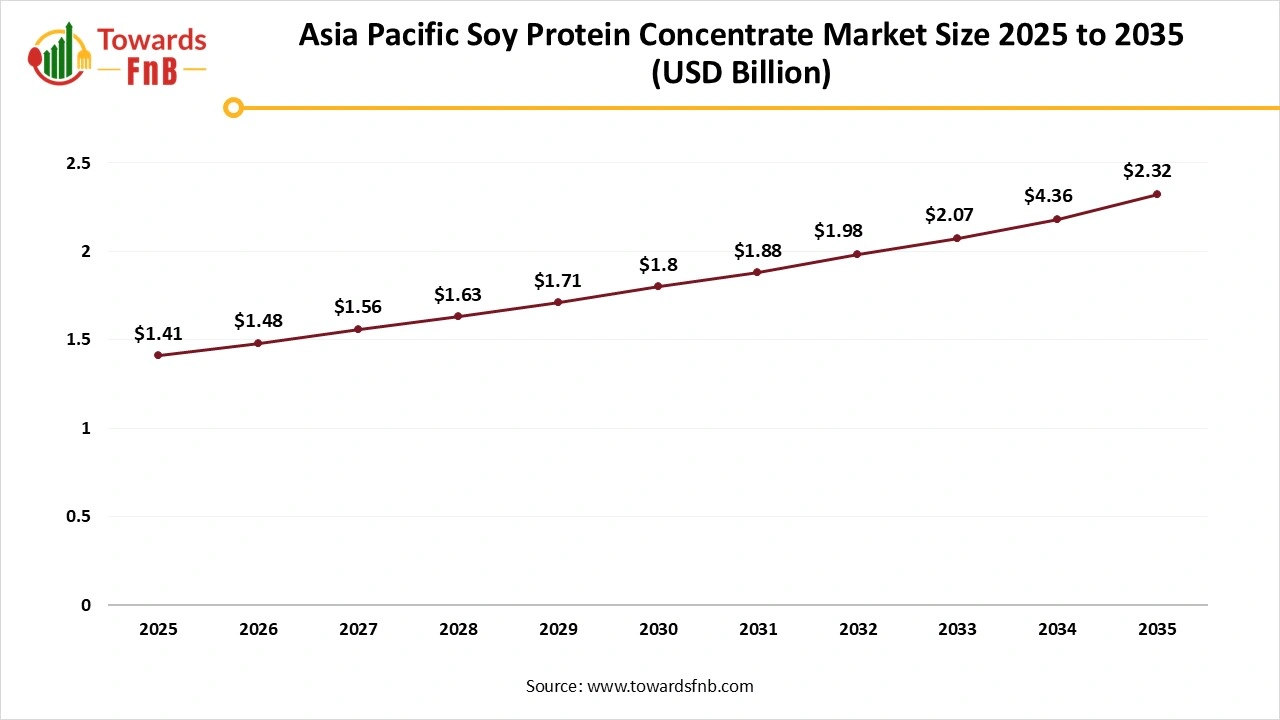
Asia Pacific Dominated the Soy Protein Concentrate Market in 2025
Asia Pacific dominated the soy protein concentrate market in 2025, mainly due to the growing population of health-conscious consumers leading to higher demand for plant-based protein options. Higher demand for health-oriented products due to their growing health and wellness trends is another major factor for the growth of the market. The rising incorporation of soy protein into various domains, such as sports nutrition, the food and beverage sector, and animal feed, in the region helps to fuel the growth of the market. India has a major contribution in the growth of the market due to the growing population of a health-conscious crowd in the region and evolving dietary preferences in the region.
North America Is Observed to Be the Fastest-Growing Region in the Foreseen Period
North America is observed to be the fastest-growing region in the foreseen period due to the growing populations of vegans, vegetarians, flexitarians, and plant-based diet followers in the region. Such consumers lead to higher demand for plant-based protein options and meat alternatives in the region, further fueling the growth of the market in the foreseeable period. Sustainability and environmental benefits also help to elevate the market’s growth in the region. The US has made a major contribution to the growth of the market due to the rising population of lactose intolerants, leading to higher demand for dairy alternatives, which helps to fuel the growth of the market in the region.
Europe Is Observed to Have a Notable Growth in the Foreseen Period
Europe is observed to have a notable growth in the foreseen period due to higher demand for healthier and plant-based choices, fueling the growth of the market. The growing population of vegans, vegetarians, and flexitarians also helps to fuel the growth of the market. Expanding application of soy protein concentrate in various domains, such as food and beverages, sports nutrition, and other applications, also helps to fuel the growth of the market. Germany has a major contribution to the growth of the market due to changing consumer preferences and higher demand for plant-based and healthier choices, such as vegan meat and patties, fueling the growth of the market.
Trade Analysis for the Soy Protein Concentrate Market
What Is Actually Traded (Product Forms and HS Proxies)
- Soy protein concentrates used as food ingredients to boost protein content in meat analogues, snacks, beverages, and processed foods are commonly traded under HS 21061000 (food preparations not elsewhere specified) when supplied as finished ingredient blends or under HS 35040099 (protein concentrates) for more purified forms.
- Textured soy protein (TSP) and defatted soy protein flours used in industrial food applications are often classified under HS 350400 (soy protein and soybean meal preparations) or HS 120810 for defatted soy flour depending on processing and end use.
- Soy protein derivatives formulated for specialized nutrition (e.g., sports nutrition, clinical foods) may be coded under HS 210690 (food preparations not covered elsewhere) when blended with other ingredients.
- Bulk shipments of soy protein granules or powders destined for repackaging are typically declared under HS 35040099 or HS 21061000 depending on manufacturer documentation and country interpretation.
- Packaging materials for soy protein concentrates, such as sacks, bags, and liners, are traded under separate headings (e.g., HS 3923) distinct from the protein content itself.
Top Exporters (Supply Hubs)
- United States: Major exporter of soy protein concentrates and related protein ingredients driven by large soybean processing capacity and established ingredient clusters.
- Brazil: Key exporter of soy protein concentrates and defatted soy protein components linked to its strong soybean crushing and refining infrastructure.
- Argentina: Exporter of soy protein derivatives and concentrates with proximity to major global demand markets.
- Netherlands: Re-export hub for soy protein ingredients into European food manufacturing supply chains.
Top Importers (Demand Centres)
- European Union: Significant importer of soy protein concentrates and blends used in processed foods, meat alternatives, and functional ingredient applications.
- China: Major importer of soy protein concentrates for food processing, animal feed supplementation, and beverage applications.
- Japan: Imports high-performance soy protein ingredients used in nutrition products and processed foods.
- Mexico: Growing importer of soy protein concentrates driven by expansion of food processing and high-protein product categories.
Typical Trade Flows and Logistics Patterns
- Bulk soy protein concentrates and powders are shipped via containerized sea freight from major producing regions to destination markets.
- High-value or specialty blends may be shipped by air freight to meet urgent production schedules.
- Regional distribution centers repack, label, and ensure compliance documentation before delivery to food manufacturers.
- Importers often coordinate combined shipments of soy protein with other plant-based ingredients for freight optimization.
Trade Drivers and Structural Factors
- Growth in plant-based foods and meat alternatives drives demand for soy protein concentrates as primary protein functional ingredients.
- Processed food innovation increases use of soy protein for texture, emulsification, and nutritional enhancement.
- Nutrition and health trends supporting higher protein intake sustain import demand across global food markets.
- Raw soybean availability and processing capacity influence exporter competitiveness and trade flows.
- Ingredient standardization by large manufacturers fosters repeat import demand from approved supplier lists.
Regulatory, Quality, and Market-Access Considerations
- Soy protein concentrates must comply with food safety, purity specifications, and protein content labeling requirements in importing countries.
- Allergen declaration and GMO labeling rules affect market access in key jurisdictions.
- Classification under specific HS codes influences tariff treatment and customs documentation.
- Novel food or ingredient approval pathways may apply in some markets for specific protein preparations.
Government Initiatives and Public-Policy Influences
- Agricultural trade policies and soybean export incentives influence raw material sourcing for protein concentrate production.
- Nutrition programs and protein diversification strategies indirectly support demand for soy protein ingredients.
- Trade facilitation agreements and tariff harmonization measures affect cross-border movement of soy protein concentrates.
- Sustainability and plant-based dietary policies in some countries promote plant protein use and trade.
Soy Protein Concentrate Market Report Scope
| Report Attribute | Key Statistics |
| Base Year | 2025 |
| Forecast Period | 2026 to 2035 |
| Growth Rate from 2026 to 2035 | CAGR of 4.9% |
| Market Size in 2026 | USD 4.64 Billion |
| Market Size in 2027 | USD 4.86 Billion |
| Market Size in 2030 | USD 5.61 Billion |
| Market Size by 2035 | USD 7.13 Billion |
| Dominated Region | Asia Pacific |
| Fastest Growing Region | North America |
| Regions Covered | North America, Europe, Asia-Pacific, Latin America and Middle East & Africa |
Have Questions? Let’s Talk—Schedule a Meeting with Our Insights Team: https://www.towardsfnb.com/schedule-meeting
Soy Protein Concentrate Market Segmental Analysis
Form Analysis
The dry segment led the soy protein concentrate market in 2025, due to its easy maintenance, longer shelf life, and easy transportation, fueling the growth of the market. The market also observes growth as it is cost-effective and can be easily incorporated into various food and beverages options, further fueling the growth of the market. Usage of dry soy protein concentrate in the animal feed industry is another major factor for the growth of the market.
The liquid segment is observed to grow in the foreseen period due to higher demand for functional and protein-rich beverages such as smoothie and liquid nutraceuticals, fueling the growth of the market in the foreseen period. Technological advancements, such as improving the nutritional factor of liquid soy protein, which is helpful for easy absorption, are another major factor for the growth of the market.
Application Analysis
The food products segment led the soy protein concentrate market in 2025, due to higher demand for textured soy protein, which helps enhance the taste and texture of food options, fueling the growth of the market. Higher demand for cost-effective, protein-rich, and nutritional food options by the growing population of health-conscious consumers is another major factor for the growth of the market. Easy availability of plant-based options, an ideal meat alternative, further propels the market’s growth.
The dietary supplements segment is expected to grow in the foreseen period due to higher demand for preventive healthcare, growing lifestyle-related health issues, and higher demand for nutritional supplements to maintain a healthy lifestyle in the foreseen period. Rising demand for elderly care, protein-rich options, and functional nutrition is fueling the growth of the market in the foreseeable period. Higher demand for nutritional supplements for consumers who wish to manage obesity, diabetes, and cardiovascular issues also helps to propel the growth of the market.
Function Analysis
The emulsification segment led the soy protein concentrate market in 2025, due to higher demand for stability in processed and convenient food options, which is one of the major factors for the growth of the market. It also leads to higher demand for meat and dairy alternatives, further fueling the growth of the market. Improved emulsifying properties allow the soy concentrate to bind water and fat, which helps to enhance the texture and taste of various food and beverage options, also helping to fuel the growth of the market.
The thickening agent segment is expected to grow in the foreseen period due to higher demand for processed, convenient, and ready-to-eat options, leading to higher demand for thickeners. They help to enhance the stability, taste, and texture of various food and beverage options, further fueling the growth of the market. The market also observes growth due to the beneficial properties of soy concentrates, such as moisture-retaining capabilities, emulsifying, and thickening, which are essential to enhance the taste, texture, and flavor of food options, further fueling the market’s growth in the foreseen period.
Feel Free to Get in Touch with Us for Orders or Any Questions at: sales@towardsfnb.com
Additional Topics Worth Exploring:
- Tea Market: The global tea market size is projected to expand from USD 30.25 billion in 2025 to USD 54.68 billion by 2034, growing at a CAGR of 6.8% during the forecast period from 2025 to 2034.
- Gluten Free Food Market: The global gluten free food market size is increasing from USD 15.71 billion in 2026 and is expected to surpass USD 37.04 billion by 2035, with a projected CAGR of 10% during the forecast period from 2026 to 2035.
- Organic Food Market: The global organic food market size is expected to grow from USD 253.96 billion in 2025 to USD 660.25 billion by 2034, with a compound annual growth rate (CAGR) of 11.20% during the forecast period from 2025 to 2034.
- Canned Food Market: The global canned food market size is projected to expand from USD 144.43 billion in 2026 to reach around USD 218.37 billion by 2035, growing at a CAGR of 4.7% during the forecast period from 2026 to 2035.
- Dietary Supplements Market: The global dietary supplements market size is projected to reach USD 507.33 billion by 2035, growing from USD 229.77 billion in 2026, at a CAGR of 9.2% from 2026 to 2035.
- Canned Wines Market: The global canned wines market size is expected to increase from USD 142.20 million in 2026 to reach around USD 369.70 million by 2035, growing at a CAGR of 11.2% throughout the forecast period from 2026 to 2035.
- Plant-based Protein Market: The global plant-based protein market size is forecasted to expand from USD 22.10 billion in 2026 and is expected to reach USD 46.82 billion by 2035, growing at a CAGR of 8.7% during the forecast period from 2026 to 2035.
- Frozen Food Market: The global frozen food market size is expected to grow from USD 473.40 billion in 2026 to reach around USD 721.91 billion by 2035, at a CAGR of 4.8% over the forecast period from 2025 to 2034.
- Beverage Packaging Market: The global beverage packaging market size is projected to reach USD 285.66 billion by 2035, growing from USD 182.57 billion in 2026, at a CAGR of 5.1% during the forecast period from 2026 to 2035.
- Vegan Food Market: The global vegan food market size is evaluated at USD 24.77 billion in 2026 and is expected to reach USD 61.85 billion by 2034, with a CAGR of 10.7% during the forecast period from 2025 to 2034.
- Food Additives Market: The global food additives market size is rising from USD 128.14 billion in 2025 to USD 214.66 billion by 2034. This projected expansion reflects a CAGR of 5.9% throughout the forecast period from 2025 to 2034.
- Coconut Products Market: The global coconut products market size is expected to climb from USD 14.18 billion in 2025 to approximately USD 33.71 billion by 2034, growing at a CAGR of 10.1% during the forecast from 2025 to 2034.
Top Companies of Soy Protein Concentrate Market
- CHS Inc.
- Bunge Limited
- Wilmar International
- Farbest Brands
- The Scoular Company
- Sotexpro
- Burcon NutraScience Corporation
- Now Foods
- Glanbia Nutritionals
- Prinova Group LLC
- Sonic Biochem
- Medix Laboratories
- Chaitanya Chemicals
- Bioway (Xi'an) Organic Ingredients Co., Ltd.
- Batory Foods
- Emsland Group
- Grain Processing Corporation
- Global Bio-Chem Technology Group Co., Ltd.
- Costantino & C. SpA
- Foodchem International Corporation
- Avebe
- SMS Corporation Co., Ltd.
- Crown Soya Protein Group
- Shandong Yuwang Industrial Co., Ltd.
Segments Covered in the Report
By Form
- Dry
- Liquid
By Application
- Food Products
- Beverages
- Dietary Supplements
- Nutraceuticals
- Animal Feed
- Cosmetics and Personal Care
- Pharmaceuticals
- Others
By Function
- Emulsification
- Solubility
- Water Binding
- Foaming
- Thickening Agent
- Others
By Region
North America
- U.S.
- Canada
Asia Pacific
- China
- Japan
- India
- South Korea
- Thailand
Europe
- Germany
- UK
- France
- Italy
- Spain
- Sweden
- Denmark
- Norway
Latin America
- Brazil
- Mexico
- Argentina
Middle East and Africa (MEA)
- South Africa
- UAE
- Saudi Arabia
- Kuwait
Thank you for exploring our insights. For more targeted information, customized chapter-wise sections and region-specific editions such as North America, Europe, or Asia Pacific—are also available upon request.
For Detailed Pricing and Tailored Market Report Options, Click Here: https://www.towardsfnb.com/checkout/5984
Feel Free to Get in Touch with Us for Orders or Any Questions at: sales@towardsfnb.com
Unlock expert insights, custom research, and premium support with the Towards FnB Annual Membership. For USD 495/month (billed annually), get full access to exclusive F&B market data and personalized guidance. It’s your strategic edge in the food and beverage industry: https://www.towardsfnb.com/get-an-annual-membership
About Us
Towards FnB is a global consulting firm specializing in the food and beverage industry, providing innovative solutions and expert guidance to elevate businesses. With an in-depth understanding of the dynamic F&B sector, we deliver customized market analysis and strategic insights. Our team of seasoned professionals is committed to empowering clients with the knowledge needed to make informed decisions, ensuring they stay ahead of market trends. Partner with us as we redefine success in the rapidly evolving food and beverage landscape, and together, we’ll navigate this transformative journey.
Web: https://www.towardsfnb.com/
Our Trusted Data Partners
Precedence Research | Statifacts | Towards Packaging | Towards Chemical and Materials| Nova One Advisor | Food Beverage Strategies | FnB Market Pulse | Nutraceuticals Func Foods | Onco Quant | Sustainability Quant | Specialty Chemicals Analytics
For Latest Update Follow Us:
Discover More Market Trends and Insights from Towards FnB:
➡️Beverage Flavors Market: https://www.towardsfnb.com/insights/beverage-flavors-market
➡️Salt Market: https://www.towardsfnb.com/insights/salt-market
➡️Probiotic Food Market: https://www.towardsfnb.com/insights/probiotic-food-market
➡️Protein Bar Market: https://www.towardsfnb.com/insights/protein-bar-market
➡️Gluten-Free Bakery Market: https://www.towardsfnb.com/insights/gluten-free-bakery-market
➡️Europe Nutraceuticals Market: https://www.towardsfnb.com/insights/europe-nutraceuticals-market
➡️Non-Alcoholic Beverages Market: https://www.towardsfnb.com/insights/non-alcoholic-beverages-market
➡️Dry Fruit Market: https://www.towardsfnb.com/insights/dry-fruit-market
➡️Frozen Meat Market: https://www.towardsfnb.com/insights/frozen-meat-market
➡️Fish Oil Market: https://www.towardsfnb.com/insights/fish-oil-market
➡️Soft Drink Concentrates Market: https://www.towardsfnb.com/insights/soft-drink-concentrates-market
➡️Meal Kits Market: https://www.towardsfnb.com/insights/meal-kits-market
➡️Ethnic Food Market: https://www.towardsfnb.com/insights/ethnic-food-market