
How November 2025 Weather Is Driving Demand For Smart Gate Repair Across The Bay Area
Concord, United States - October 20, 2025 / The Expert Gate Company /
Shorter days, shifting temperatures, and a wave of seasonal storms make November one of the toughest months for outdoor mechanical systems across the Bay Area. Automatic gates—exposed to constant cycles of moisture, salt-laden air, and debris—are among the first components of a property to show strain. According to data from the National Weather Service San Francisco Bay Area, average rainfall increases by nearly 45% between October and November, raising the risk of electrical faults, rust, and gate sensor malfunctions.
This information, provided with expertise from The Expert Gate Company, highlights how critical it is for homeowners to inspect and service their systems before winter intensifies. Over two decades of maintenance experience have shown that early-season checks prevent nearly 60% of cold-weather breakdowns, extending gate motor life by years. For residents managing bay area automatic gate systems, this period isn’t just about convenience—it’s about ensuring reliable security and energy efficiency during the damp season when mechanical failures peak.
Quick Overview
- Introduction: Why November Is Crucial For Bay Area Gate Maintenance
- Rising Security Needs Driving Smart Gate Upgrades Across Local Neighborhoods
- Common Automatic Gate Failures Homeowners Face During November Weather
- How Smart Technology Improves Safety And Convenience For Bay Area Residents
- Energy Efficiency And Cost Savings Through Modern Gate Systems
- Bay Area Automatic Gate Services Enhancing Residential And Commercial Properties
- Expert Tips For Preventing Seasonal Gate Damage Before Winter
- Summary: Keeping Your Bay Area Property Secure With Smart Gate Repairs
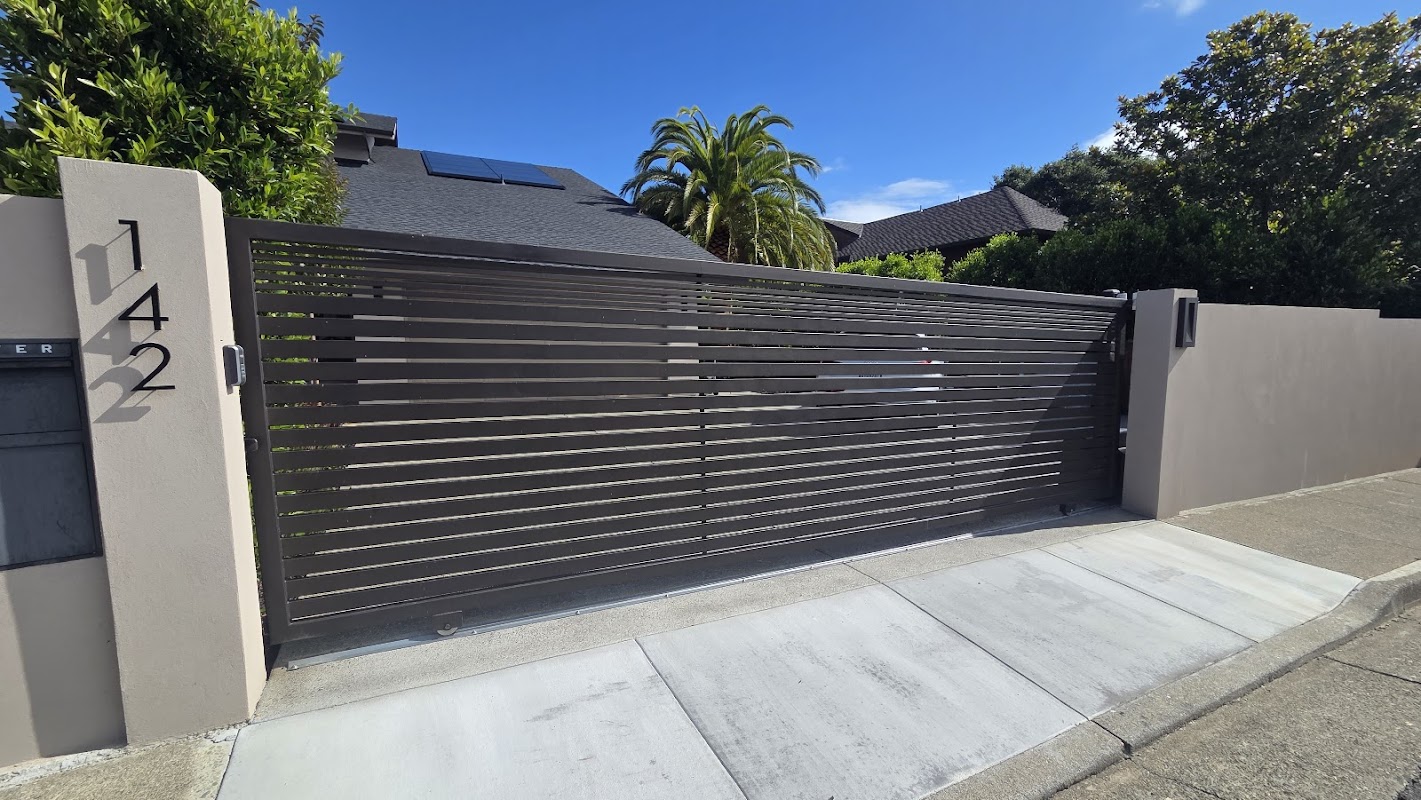
Rising Security Needs Driving Smart Gate Upgrades Across Local Neighborhoods
The Bay Area’s evolving residential landscape is marked by an increased emphasis on home automation and security technology. The California Department of Justice reported a 12% increase in residential property crimes in 2024, primarily affecting suburban zones like Walnut Creek, San Mateo, and Oakland Hills. This upward trend has led many property owners to invest in smart gate systems that integrate with mobile apps, cloud monitoring, and AI-powered motion sensors.
Smart gate technology merges mechanical reliability with digital control. Systems using Wi-Fi-enabled openers, such as LiftMaster’s myQ and FAAC’s 844 ER, allow homeowners to monitor access remotely and receive instant alerts about unauthorized activity. Many systems now include geofencing features—automatically opening when a trusted device is within range, reducing unnecessary wear on motors and arms.
Recent studies from Statista show that over 64% of Bay Area homeowners using smart home devices also incorporate gate control systems. This trend demonstrates a shift toward integrated perimeter security, especially in neighborhoods with higher property values and larger driveways.
Homeowners who upgrade to smart gate systems gain several benefits:
- Instant access control: Users can grant entry remotely through mobile apps.
- Automatic diagnostics: Newer models self-detect mechanical stress and send maintenance alerts.
- Energy optimization: Some models use motion-based timers that reduce standby power use by up to 20%.
Feature | Traditional Gate Systems | Smart Gate Systems (2025 Models) |
Control Method | Manual/Remote Clicker | Wi-Fi / App / Voice Control |
Maintenance Alerts | None | Built-in diagnostics |
Power Efficiency | Standard consumption | 15–25% energy savings |
Access Logs | Not available | Real-time tracking |
The combination of security data and convenience has made these upgrades a priority for Bay Area homeowners who want safer, more energy-efficient properties without constant manual oversight. These improvements also add measurable value—according to Realtor.com, homes with automated gate systems sell for 2–5% higher on average due to enhanced curb appeal and smart home compatibility.
Common Automatic Gate Failures Homeowners Face During November Weather
November weather in the Bay Area often alternates between coastal fog, heavy rains, and occasional windstorms. These conditions cause distinct wear patterns on mechanical and electronic gate components. Field technicians report that nearly 70% of emergency service calls in late autumn involve electrical moisture intrusion, sensor misalignment, or worn-out drive gears.
The most common November failures include:
- Corroded electrical boards due to trapped moisture inside control boxes.
- Rust and oxidation forming on iron gates, especially in areas near the bay or marine fog zones.
- Warped swing arms and gate misalignment caused by uneven ground expansion.
- Photo-eye sensor obstruction from wet leaves and debris, which can stop gates from closing fully.
- Battery and power-supply degradation in solar-powered gates due to shorter daylight hours.
Technicians across the Bay Area recommend inspecting key components at least twice per year, particularly focusing on motor housing seals, chain lubrication, and the tension of support brackets. Systems from brands like Nice Apollo and Doorking tend to withstand the humidity better, provided regular cleaning and re-lubrication are performed.
Technical nuances professionals often check during seasonal service:
- Motor Amperage Load: A rise above 10% of baseline amperage typically indicates internal drag or rust buildup.
- Gate Alignment: Even a 5mm hinge offset can strain motors and gears, doubling energy consumption.
- Lubricant Viscosity: Winter-grade grease prevents coagulation that causes jamming in cooler mornings.
Professionals often advise installing small desiccant packs inside electrical enclosures or using NEMA 4-rated boxes for improved moisture resistance. Preventive steps like these can reduce repair frequency significantly throughout the wet season.
Maintaining proper drainage around gate bases also prevents pooling water that damages underground wiring conduits. Many older Bay Area properties, built before 1990, still use shallow conduit designs that are not up to modern waterproofing standards. Retrofitting these with weather-resistant tubing or sealed couplers dramatically improves longevity.
By reinforcing electrical protection and mechanical alignment now, homeowners avoid most seasonal failures and keep their systems functioning smoothly throughout the winter. The next section explores how advanced smart features continue to transform everyday gate use and safety efficiency across Bay Area properties.
How Smart Technology Improves Safety And Convenience For Bay Area Residents
Smart automation has moved beyond luxury—it’s a practical necessity in the Bay Area’s tech-driven environment. Gate systems today operate more like integrated safety networks, combining hardware precision with responsive sensors and AI-based logic. The latest models from CAME and BFT Automation employ adaptive control algorithms that learn user patterns, automatically adjusting open-and-close times to reduce motor fatigue and improve access security.
The Bay Area’s mix of sloped driveways and limited parking access makes these smart features essential. Residents in regions such as Marin County and Cupertino are increasingly using dual-sensor configurations—one for motion and one for weight detection—to prevent accidental closures and vehicle damage. The National Electrical Manufacturers Association (NEMA) reports a 20% reduction in safety incidents in properties equipped with adaptive sensors and pressure-sensitive edges.
Modern smart gate features boosting convenience:
- Voice assistant compatibility with Alexa or Google Home.
- Custom access scheduling for deliveries or service personnel.
- Integrated emergency override for fire department entry codes.
Moreover, local homeowners benefit from predictive maintenance tools that send diagnostic alerts directly to smartphones. These notifications detect torque resistance changes in motor shafts—a subtle sign that hinges or gearboxes may soon fail. Catching this early allows minor servicing rather than costly replacements later.
A 2025 consumer study by Home Innovation Research Labs found that properties using automated gate monitoring systems saw maintenance costs drop by 28% over three years. This proves that smart technology not only improves safety but also delivers measurable long-term savings.
Energy Efficiency And Cost Savings Through Modern Gate Systems
Energy consumption is often overlooked in automatic gate systems, but with California’s increasing utility rates—reported by the U.S. Energy Information Administration to have risen over 9% in 2024—efficiency has become an important factor for Bay Area homeowners. Modern gate systems, equipped with intelligent power management and low-voltage motors, are specifically designed to reduce standby electricity draw and extend the life of internal components.
One of the most significant advancements in this area involves DC motor technology. Unlike older AC-based models, DC motors consume up to 40% less energy and allow for smoother acceleration and deceleration, minimizing mechanical stress. Smart control boards now regulate power based on motion frequency, ensuring the system only draws energy when in use.
Energy-saving features increasingly found in new systems:
- Solar-ready integration: Many gates in suburban zones such as Palo Alto and Santa Clara now operate partially or fully on solar kits. These setups store excess power during daylight hours, ensuring seamless nighttime operation.
- Sleep mode functionality: When inactive, modern openers enter a power-saving state, cutting consumption by roughly 25–30%.
- LED indicator replacements: Replacing halogen gate lamps with LEDs not only reduces wattage but also enhances nighttime visibility.
The California Energy Commission reports that households adopting smart energy systems—gates, lighting, and thermostats combined—can reduce annual energy usage by an estimated 12–17%. For multi-gate commercial properties, that figure can be significantly higher.
Beyond the electronics, mechanical design plays a key role in reducing resistance and wear. Advanced hinge assemblies, coated with Teflon-based lubricants, lower friction by nearly 50%. Modern gate frames are often constructed from powder-coated aluminum or galvanized steel, offering strong resistance to corrosion while remaining lightweight, which directly reduces motor load.
Smart gates today combine functionality with design. Many newer models blend modern architectural aesthetics—flat-slat aluminum panels, minimalist linework, or frosted acrylic insets—with sustainable materials. This ensures not only reduced carbon impact but also better integration with Bay Area contemporary home styles.
The combination of efficiency and durability turns what was once a purely mechanical device into a sustainable household component that complements energy-smart living—bridging seamlessly into the broader service expertise found across Bay Area automatic gate specialists.
Bay Area Automatic Gate Services Enhancing Residential And Commercial Properties
The variety of property types across the Bay Area—ranging from narrow-lot urban homes in San Francisco to large estates and gated communities in San Jose or Danville—demands a wide selection of gate designs and functionalities. Local gate services have evolved to accommodate these differences through specialized installations and maintenance approaches.
Residential clients often select swing or sliding gates, with materials including aluminum, wrought iron, or composite wood panels. Commercial facilities, on the other hand, prefer cantilevered or vertical lift gates that allow uninterrupted ground clearance and faster operation. The International Door Association (IDA) reports that the demand for automated sliding gates in commercial properties grew by 22% between 2023 and 2025, primarily due to increased logistics and storage facilities across the South Bay.
Key Service Categories Common in the Bay Area:
- Gate Motor Replacement and Calibration – technicians focus on adjusting motor limits, torque settings, and chain alignment for optimal performance.
- Control Board Programming – integrating smart controllers with home networks or access points for keyless entry and real-time monitoring.
- Safety Sensor Installation – deploying infrared and ultrasonic sensors that comply with UL 325 Safety Standards.
- Periodic Maintenance Programs – seasonal cleaning, lubrication, and corrosion checks scheduled around weather cycles.
Recent trends show growing adoption of hybrid access systems combining RFID card readers for residential complexes and Bluetooth-based proximity sensors for single-family homes. These enhancements are practical during high-traffic months when gate use intensifies due to holiday deliveries and visitor access.
Among the brands often chosen by Bay Area professionals are LiftMaster, FAAC, and Doorking, each offering control panels compatible with cloud-based monitoring and solar assist modules. However, the right selection depends on terrain, gate weight, and local exposure to humidity. For instance, hillside properties in Belmont or Los Altos often require reinforced anchor systems and low-profile motors that handle steeper gradients without overloading.
Technicians note that more than 35% of gate failures reported across the Bay Area stem from improper installation angles or lack of tension balancing. To prevent this, seasoned installers employ digital inclinometers and load cell testers, ensuring every hinge and pivot aligns within factory specifications.
The integration of these gate systems not only strengthens property protection but also supports architectural harmony. Many Bay Area architects collaborate with gate specialists to design façades that blend utility with modern aesthetics—clean lines, privacy-focused slat spacing, and muted tones that suit both residential and commercial exteriors.
Expert Tips For Preventing Seasonal Gate Damage Before Winter
The Bay Area’s wet season poses recurring challenges for mechanical and electronic gate systems. Preventive maintenance at this time of year is essential to counter moisture, corrosion, and electrical stress. Seasoned technicians emphasize a few practical measures that homeowners can handle or schedule before late November sets in.
1. Regular Cleaning and Drainage Management
Blocked drainage lines and compacted soil often trap standing water near gate bases, leading to premature corrosion. Clearing debris and ensuring a 1-inch gap beneath swing gates allows water to escape freely. For sliding gates, cleaning the track line weekly prevents grit accumulation that grinds rollers and bearings.
2. Lubrication and Seal Checks
Applying silicone- or lithium-based grease on rollers, hinges, and pivot points ensures consistent motion even during colder mornings. Experts recommend inspecting rubber gaskets on motor housings—any sign of cracking indicates water ingress risk. Replacing them early prevents short circuits once rains intensify.
3. Inspect Electrical Enclosures
Most moisture damage originates from unsealed conduit joints. Technicians advise resealing electrical lines using heat-shrink tubing and adding desiccant packs inside control boxes to absorb humidity. Upgrading to NEMA 4X-rated enclosures is a long-term fix for areas with persistent fog or salt exposure.
4. Monitor Battery and Solar Systems
Shorter daylight hours reduce charging efficiency. Checking voltage levels weekly ensures batteries remain above 12.4V for optimal performance. Cleaning solar panels with distilled water improves output by up to 18%, as dust and salt deposits reduce charge rates.
5. Reinforce Metal Surfaces
Applying anti-corrosive coatings such as zinc-rich primers or epoxy paint strengthens resistance to oxidation. For decorative iron gates, adding a clear powder coating layer extends lifespan significantly without altering the design aesthetic.
Professional technicians also emphasize periodic amp-draw testing using clamp meters—a rise of more than 0.3 amps compared to baseline readings signals early internal wear. Addressing it promptly can prevent motor burnout during cold starts.
Additionally, integrating wind-resistance brackets and shock absorbers can stabilize gates during Bay Area’s gusty days that sometimes exceed 35 mph, particularly in coastal zones like Half Moon Bay. Reinforcement kits reduce vibration and extend sensor alignment life.
Seasonal prevention not only keeps systems functional but also extends longevity by several years. Technicians estimate that homeowners performing these pre-winter checks can avoid up to 70% of emergency breakdowns typically reported between November and February.

Summary: Keeping Your Bay Area Property Secure With Smart Gate Repairs
As winter approaches, taking the time to inspect and service your gate system can make all the difference in safety and performance. Regular maintenance helps prevent costly breakdowns caused by moisture, debris, and temperature swings common in the Bay Area. Modern gate systems with smart automation, durable materials, and weather-resistant coatings are proven to last longer and perform better throughout the season.
Homeowners who act before colder months arrive ensure smooth, reliable operation and enhanced property protection. Whether you own a residential gate or manage a commercial property, timely upgrades and checks are key to keeping your entrance secure and efficient through the coming months.
For professional guidance or assistance with any automatic gate service across the Bay Area, contact The Expert Gate Company today to schedule an inspection or learn more about maintenance and upgrade options.

Contact Information:
The Expert Gate Company
2320 Belmont rd
Concord, CA 94520
United States
The Expert Gate Company
(925) 766-8893
https://theexpertgate.com



