North American Grazing Lands Congress Brings Together International Leaders to Celebrate the Role of Canadian Rangelands and Grasslands in Food Security, Biodiversity, and Climate Resilience
Canada NewsWire
CALGARY, AB, July 14, 2026
CALGARY, AB, July 14, 2026 /CNW/ -- Ranchers, conservation organizations, social media content creators, and industry leaders joined federal government representatives and a delegation from the United Nations Food and Agriculture Organization (FAO), including the Director General, on a ranch tour in southern Alberta. The tour celebrated the International Year of Rangelands and Pastoralists (IYRP) and offered guests from around the world the chance to see modern day pastoralism alive and well in Canada.
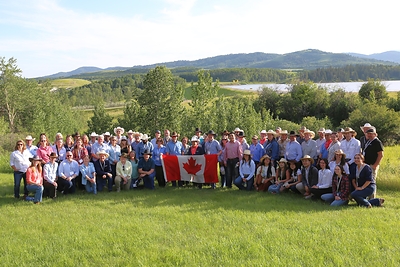
Hosted by Public and Stakeholder Engagement, a division of the Canadian Cattle Association, the southern Alberta tour was the first leg of the North American Grazing Lands Congress, with the second portion hosted in Utah by the U.S. Roundtable for Sustainable Beef. Both tours brought participants onto the landscape to see firsthand how ranchers are preserving lands that support food production, wildlife habitat, biodiversity, carbon sequestration, and rural communities. Sponsorship for the event was provided by Cargill, the Canadian Cattle Foundation, the Canadian Forage and Grasslands Association, and the Western Stock Growers Association.
Starting at UNESCO World Heritage Site Head-Smashed-In Buffalo Jump, attendees learned how North American grasslands evolved with bison as a keystone grazing species and Indigenous peoples as stewards of the land. The tour then took guests to the South Porcupine Ranch, run by Bill and Nancy Newton and family, and the Waldron Ranch Grazing Co-operative, demonstrating both traditional principles and innovative techniques to care for grazing lands to ensure they are healthy and thriving.
Although often overlooked, native grasslands are among Canada's most endangered ecosystems. Across southern Alberta and Canada, ranchers manage vast areas of rangeland that provide habitat for hundreds of species of birds, mammals, insects and plants, while helping protect watersheds, store carbon and maintain open spaces.
"Canadian beef cattle farmers and ranchers are critical to preserving grassland ecosystems that house numerous species at risk, capture carbon, and support the production of high-quality protein in the form of beef," said Tyler Fulton, President of the Canadian Cattle Association. "The International Year of Rangelands and Pastoralists reminds us that today's ranchers are fulfilling a cultural, economic, and environmental role that these landscapes and our communities were built upon."
Participants observed the cultural significance of grasslands to both Indigenous communities and ranching families in the area. Guests saw firsthand how grazing management has been contributing to improving grassland health and even witnessed its benefits to biodiversity firsthand, seeing countless plant species and even spotting wildlife. Discussions also highlighted the increasing pressures threatening ranchers, including fluctuating economic and weather patterns and conversion of grassland ecosystems to other uses with higher financial incentives.
"Ranchers have been long-term caretakers for grazing lands in North America," said Dr. Samantha Werth, Executive Director of the U.S. States Roundtable for Sustainable Beef. "Preserving these ecosystems and producing protein for our growing population offer a service to society that should be recognized and supported."
The International Year of Rangelands and Pastoralists was declared by the United Nations General Assembly to raise awareness of the economic, environmental and social importance of rangelands and the people who steward them. In Canada, the initiative serves as a platform to educate the public, celebrate stewardship successes and advance policies that support both ranchers and the landscapes they manage.
The event concluded with a call for continued collaboration among producers, governments, Indigenous communities, conservation organizations and the public to ensure North American ranchers are empowered and supported to continue preserving healthy, productive and resilient grazing lands for future generations.
About the International Year of Rangelands and Pastoralists
The United Nations General Assembly declared 2026 the International Year of Rangelands and Pastoralists (IYRP) to increase awareness of the value of rangelands and the people who steward them. Rangelands cover more than half of the Earth's land surface and provide essential benefits including food production, wildlife habitat, biodiversity conservation, carbon storage, water regulation and support for rural livelihoods.

SOURCE Canadian Cattle Association


