
2026 Research Tracks Rising Gate Installation Campbell Security Upgrades
Santa Clara, United States - March 17, 2026 / RNA Automatic Gates /
The shift toward automated property access in the South Bay has hit a new peak this April. Data provided by technicians at RNA Automatic Gates shows that property owners are moving away from manual operation at a rate not seen in the last five years. Recent 2026 research tracks rising Gate Installation Campbell as homeowners prioritize integrated security over simple curb appeal. This increase is largely driven by a 14% rise in regional property values, prompting many to seek more sophisticated entry solutions. The current market shows that about 65% of new setups now include high-end smartphone connectivity and biometric readers.High-traffic residential zones often see failures in cheaper, off-brand components, so the move toward professional-grade equipment is a significant trend this spring.
Quick Overview
Introduction Campbell Security Gate Trends And Property Access Changes In 2026
Local Property Market Growth Drives Demand For Safer Driveway Entry Systems
Spring Weather Patterns Affect Gate Motors, Sensors, and Access Hardware
Homeowner Questions About Gate Installation Campbell Costs Safety And Reliability
Residential Automatic Gate Systems Improve Privacy, Access Control, and Daily Convenience
Commercial Property Owners Upgrade Sliding Gate Operators And Security Technology
Technicians Identify Common Motor Sensor And Remote Control Gate Failures
Summary: Campbell Property Owners Continue Investing In Automatic Gate Systems

Local Property Market Growth Drives Demand For Safer Driveway Entry Systems
Recent real estate shifts in Campbell indicate a stronger focus on perimeter reinforcement. As property values climb, the expectation for high-tech entry points grows with them. Many homeowners now view a basic barrier as insufficient for modern needs. They want systems that talk to their home automation hubs. Data from local building permits indicate a 22% increase in motorized-entry upgrades compared with the same period last year. This trend follows a broader pattern seen in Silicon Valley residential security reports where physical barriers are the first line of defense.
Technical Requirements for Modern Entries
Putting in a new system is not just about the look. It involves calculating the wind load and the weight of the material. A heavy wrought iron gate needs a different motor than a light aluminum one. Technicians often see issues when a motor is undersized for the task. This leads to burnt-out circuit boards and stripped gears.
Weight Capacity: Most residential swing gates weigh between 300 and 800 pounds.
Cycle Rating: High-end motors are rated for 50 cycles per day or more.
Safety Sensors: Modern UL 325 standards require monitored safety edges or photo eyes to prevent entrapment.
Material Trends and Longevity
Homeowners are leaning toward materials that don't need much work over time. Powder-coated steel and composite woods are taking over. These materials handle the California sun better than traditional paint. Using high-quality hinges with grease fittings ensures the gate swings freely for years. If the hinges bind, the motor has to work twice as hard. This extra strain kills the battery and the motor brushes much faster than normal.
Structural Foundations
The concrete footings for the posts must be deep enough to stay steady. In Campbell, the soil can shift with changes in moisture. A post that leans even a half-inch can cause the latch to miss the strike plate. This leaves the property open and puts pressure on the locking mechanism. Professionals use rebar-reinforced concrete to keep everything lined up perfectly.
Feature | Standard Option | Premium Security Option |
Motor Type | AC Powered | DC with Battery Backup |
Access Control | Standard Remote | Encrypted App + Biometrics |
Hardware | Fixed Hinges | Adjustable Sealed Bearings |
Safety | Single Photo Eye | Dual Monitored Photo Eyes |
Stability in the ground translates to stability in the system's electronics. When the gate stays level, the limit switches trigger correctly every time. This prevents the motor from trying to push past its stop point, which is the number one cause of internal gear damage.
Spring Weather Patterns Affect Gate Motors, Sensors, and Access Hardware
The transition into the spring months brings specific challenges for outdoor electronics. While Campbell doesn't deal with snow, the morning mist and rising temperatures cause condensation inside control boxes. This moisture can short out a motherboard if the seals are old. Research from outdoor electronic durability studies shows that NEMA 3R or 4X rated enclosures are vital for keeping the brains of the system dry.
Sensor Interference and Sunland
Spring sunlight hits at lower angles during the morning and evening. This can "blind" the photo-eye sensors that stop the gate from hitting a car. If the sensor thinks there is an object in the way because of the sun, the gate won't close. Installers often add sun shields to these sensors to keep the infrared beam clear.
Infrared Beam Alignment: Even a slight vibration from wind can knock these out of sync.
Safety Edges: These pressure-sensitive strips need checking to ensure the rubber hasn't cracked.
Loop Detectors: Ground loops can fail if the driveway asphalt expands and pinches the wires.
Lubrication and Moving Parts
As the weather warms up, old grease can get tacky and attract dirt. This creates a grinding paste that eats through metal. Technicians recommend using a high-quality silicone or lithium-based spray instead of heavy grease for the most exposed parts. This keeps the internal rollers and chains moving without the mess.
Battery Health in Seasonal Shifts
Many systems use lead-acid batteries for backup power. These batteries hate temperature swings. A battery that worked fine in the winter might fail when the spring heat hits. Checking the voltage output during a cycle is the best way to see if the cells are still holding a charge. If the voltage drops too low under load, the gate might move slowly or stutter.
Keeping the hardware clean is half the battle. Dust and pollen can build up on the tracks of sliding systems. If the wheels hit a bump, the motor might think it hit a car and reverse. A quick sweep of the track once a week prevents most of these "phantom" reversals.
Homeowner Questions About Gate Installation Campbell Costs Safety And Reliability
Property owners frequently inquire about the long-term viability of their hardware investments. In the local market, reliability often hinges on the quality of the initial setup rather than the brand name alone. A common question involves the difference between hydraulic and electromechanical drives. Professional data indicates that while hydraulic systems like the FAAC 400 offer incredible power for heavy ornamental iron, electromechanical screw-drive actuators are often more cost-effective for standard residential use. These systems use a worm gear and a threaded rod to move the arm, simplifying maintenance for the average homeowner.
Safety Compliance and Liability
Safety is a non-negotiable factor in modern installations. The UL 325 standard dictates that all automated systems must have at least two independent safety means to prevent injury. Technicians often explain that a single set of photo eyes is no longer sufficient.
Most reliable setups now feature a combination of non-contact sensors and contact-based safety edges. These edges are essentially pressure-sensitive strips that send an immediate "stop" signal to the control board if they touch an obstruction. According to International Door Association safety guidelines, neglecting these features can lead to significant liability issues for the property owner.
Entrapment Protection: Mandatory sensors that detect objects in the path of travel.
Manual Release: A secure, keyed mechanism to disengage the motor during power failures.
Warning Signs: Visible alerts placed on both sides of the gate to warn pedestrians.
Factors Influencing System Longevity
The reliability of a system is directly tied to the "duty cycle" of the operator. If a motor is rated for 10 cycles an hour but is installed on a busy multi-family driveway, it will overheat and fail within months. Homeowners should look for "continuous duty" ratings if they expect high traffic. ]
Furthermore, the gate’s physical balance is critical; if it does not stay in place when disconnected from the motor, it puts unnecessary torque on the gearbox. Using adjustable sealed-bearing hinges can mitigate this drag, thereby extending the life of the internal motor brushes.
Residential Automatic Gate Systems Improve Privacy, Access Control, and Daily Convenience
Modern residential gate setups in the Campbell area are moving toward unified access control. This means the gate is no longer a standalone piece of equipment; it is a node on the home network. Technicians see a massive trend in "bridge" technology, where older 433MHz receivers are being replaced by Wi-Fi-enabled controllers.
This allows residents to monitor the status of their entry from anywhere in the world. High-performance brands like LiftMaster have integrated myQ technology to provide real-time alerts when the gate is left open, a primary concern for privacy-conscious families.
Modern Access Methods
The days of fumbling with a bulky visor remote are fading. New installations prioritize convenience through several high-tech methods:
Integrated Vehicle Transponders: Many modern luxury vehicles come with built-in buttons that can be programmed to the gate's rolling code frequency.
Telephone Entry Systems: Systems like the DoorKing 1802 allow visitors to call the homeowner's cell phone directly from the gate, allowing for remote buzzing-in of delivery drivers.
Geofencing: Some smart controllers use GPS data to automatically open the gate as the owner's vehicle approaches the driveway.
Aesthetic and Functional Design
Privacy is often the main driver for a new installation. Solid wood or composite "fill" panels are popular because they block street view. However, these act like a giant sail in the wind. A solid 12-foot gate can exert thousands of pounds of pressure on the operator during a gust.
To combat this, technicians recommend using heavy-duty gate "stops" and magnetic locks. A 1,200-pound Mag-lock keeps the gate from rattling and prevents intruders from forcing the arms open. These locks require a constant 12V or 24V power supply from the main control board, which is why a robust battery backup is essential for any high-security residential setup.
Integrating these systems requires a deep understanding of low-voltage wiring and signal interference. If the data wires are run too close to high-voltage power lines, the system may experience "ghost" openings or intermittent failures. Proper shielding and grounding of the control box are technical nuances that differentiate a professional installation from a DIY attempt.
Commercial Property Owners Upgrade Sliding Gate Operators And Security Technology
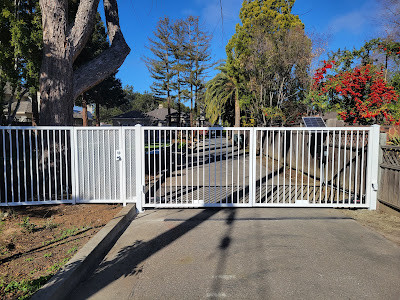
Commercial facilities in the South Bay are currently focusing on "throughput"—the speed at which vehicles can enter and exit without compromising site security. For these high-traffic environments, sliding gates are the standard because they don't swing into the path of oncoming traffic. The tech of choice in 2026 for these sites is the high-speed variable frequency drive (VFD).
These motors, such as those found in HySecurity SlideDriver models, can move a 40-foot gate at speeds of up to 3 feet per second. This rapid movement is crucial for logistics hubs and gated business parks where idling vehicles create bottlenecks.
Industrial Grade Security Features
Commercial security goes beyond a simple keypad. Facilities are now implementing long-range RFID readers, similar to those used on toll roads, to allow authorized fleet vehicles to pass through without stopping. This technology is often paired with "anti-tailgating" logic. In this configuration, the gate begins to close immediately after the rear wheels of a vehicle pass over the closing loop, preventing unauthorized cars from slipping in behind a staff member.
Inductive Loop Detectors: Wires buried in the pavement that sense the metal mass of a vehicle.
Crash-Rated Barriers: Heavy-duty bollards or gates designed to stop a vehicle traveling at high speeds.
Programmable Logic Controllers (PLC): Advanced brains that allow for custom timing and interlocking with other security doors.
Wear and Tear in High-Traffic Zones
Commercial gates operate under extreme stress. While a residential gate might open four times a day, a commercial unit might open 400 times. This requires a shift from chain-driven systems to direct-drive or heavy-duty #50 or #60 chain. Technicians frequently inspect the "trucks"—the internal rollers that stay inside the overhead or ground track.
If these rollers flat-spot due to debris, the motor's amperage draw spikes, which can trip breakers or blow fuses. Research into industrial automation and gate safety emphasizes that regular quarterly inspections are necessary to check for metal fatigue in the gate frame and the structural integrity of the V-track.
Technicians Identify Common Motor Sensor And Remote Control Gate Failures
Experience in the field shows that the most frequent service calls aren't caused by catastrophic motor failure, but by small, overlooked components. One of the leading issues identified by technicians is "infant mortality" of lead-acid batteries. These batteries typically last 2 to 3 years, but in the variable climate of the Campbell area, they can dry out sooner. When the battery fails, the gate may still run on AC power but will move sluggishly or fail to complete a full cycle during peak demand.
Signal Interference and Logic Errors
Remote control range issues often stem from local radio frequency (RF) interference. In tech-heavy areas, the 315 MHz and 390 MHz bands are crowded. Technicians often solve this by installing an external antenna or switching to 868 MHz, which is less likely to be interfered with by other household electronics. Another common "failure" is actually a safety lockout. If the photo eyes are misaligned or if a spider has spun a web over the lens, the logic board will prevent the gate from closing as a safety precaution.
Component | Common Failure Symptom | Technician Diagnosis |
Capacitor | Motor hums but won't turn | Start capacitor is blown or leaked |
Photo Eye | Gate opens but won't close | Beam is blocked or misaligned |
Limit Switch | Gate hits the post or stops early | Magnetic or mechanical switch is loose |
Loop Detector | Gate stays open or won't sense car | Ground loop wire is shorted or cracked |
Mechanical Stress Points
Technicians often find that the "gate-to-operator" attachment point is the first to fail. If the bracket is held only by light screws, the motor's constant torque will eventually rip them out of the gate frame. Professional-grade installations use through-bolts or welded tabs to ensure a permanent bond. For sliding gates, the #41 or #50 chain must have the correct tension; if it's too tight, it wears the motor bearings; too loose, and it can jump the sprocket.
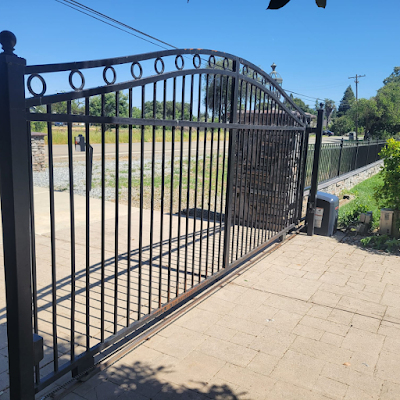
Summary: Campbell Property Owners Continue Investing In Automatic Gate Systems
The 2026 data confirms that Campbell residents are moving toward more resilient, high-tech property access. The shift is driven by a need for durable hardware and integrated security that can handle the heavy demands of modern life. Insights from technicians show that properly balanced systems using high-grade operators like All-O-Matic or Ramset significantly reduce mechanical failure. For those looking to upgrade their entry points, you can contact RNA Automatic Gates to discuss the latest in biometric access and solar-ready motor technology. Their field experience reveals that professional calibration of safety sensors and motor limits extends the system's life by years. Ultimately, investing in professional-grade components ensures that property security remains airtight while providing seamless daily convenience for both residential and commercial owners.

Contact Information:
RNA Automatic Gates
2118 Walsh Ave # 105
Santa Clara, CA 95050
United States
. .
(650) 912-1200
https://rnaautomaticgates.com/



